

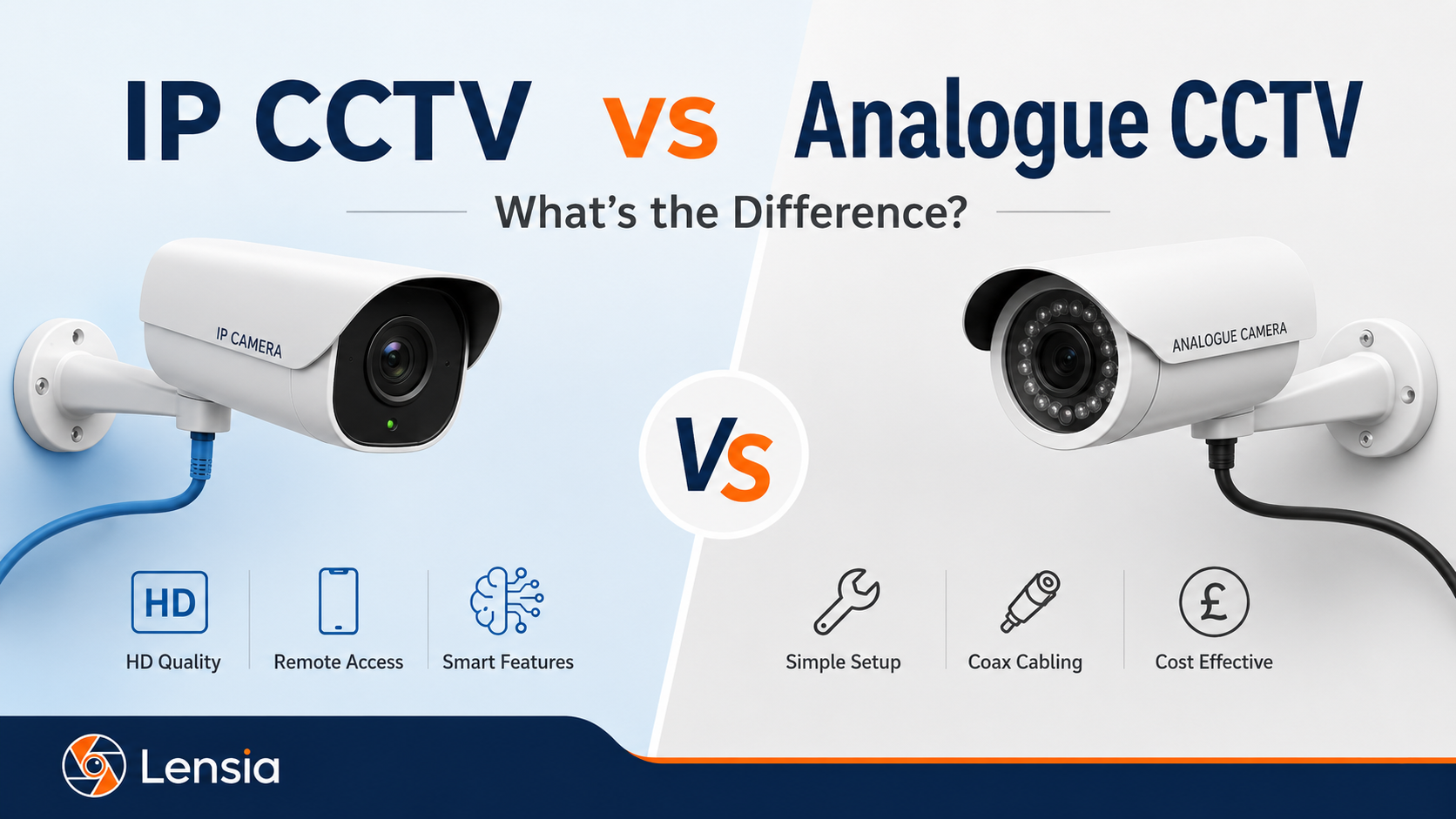
IP CCTV vs Analogue CCTV: 7 Key Differences, Pros & Best Option

IP CCTV vs Analogue CCTV: What Is the Difference?
Choosing the right CCTV system is an important decision for any home or business. Two of the most common options are IP CCTV and analogue CCTV. Both systems are designed to protect your property, record footage, and help deter crime, but they work in different ways.
In this guide, we explain the difference between IP CCTV and analogue CCTV in a clear and simple way, so you can decide which system is better for your property.
What Is an Analogue CCTV System?
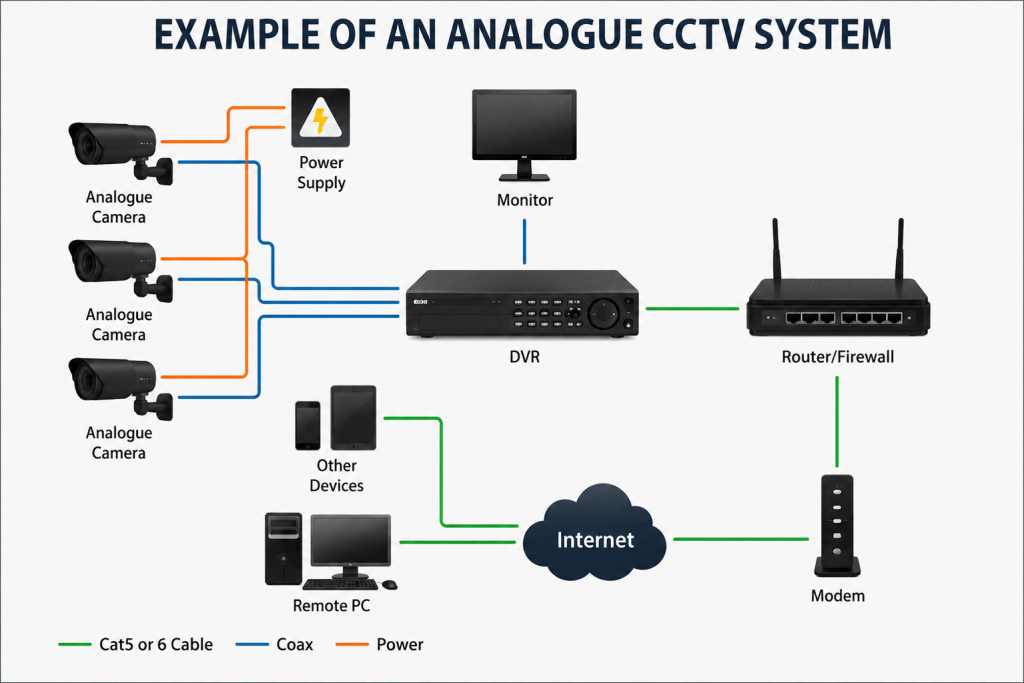
An analogue CCTV system is the traditional type of CCTV system. It uses analogue cameras connected to a recording device called a DVR, which stands for Digital Video Recorder.
The cameras send video signals through coaxial cables to the DVR. The DVR then converts the footage into a digital format so it can be stored and viewed.
Analogue CCTV systems have been used for many years and are still common in homes, shops, offices, warehouses, and older commercial properties.
What Is an IP CCTV System?
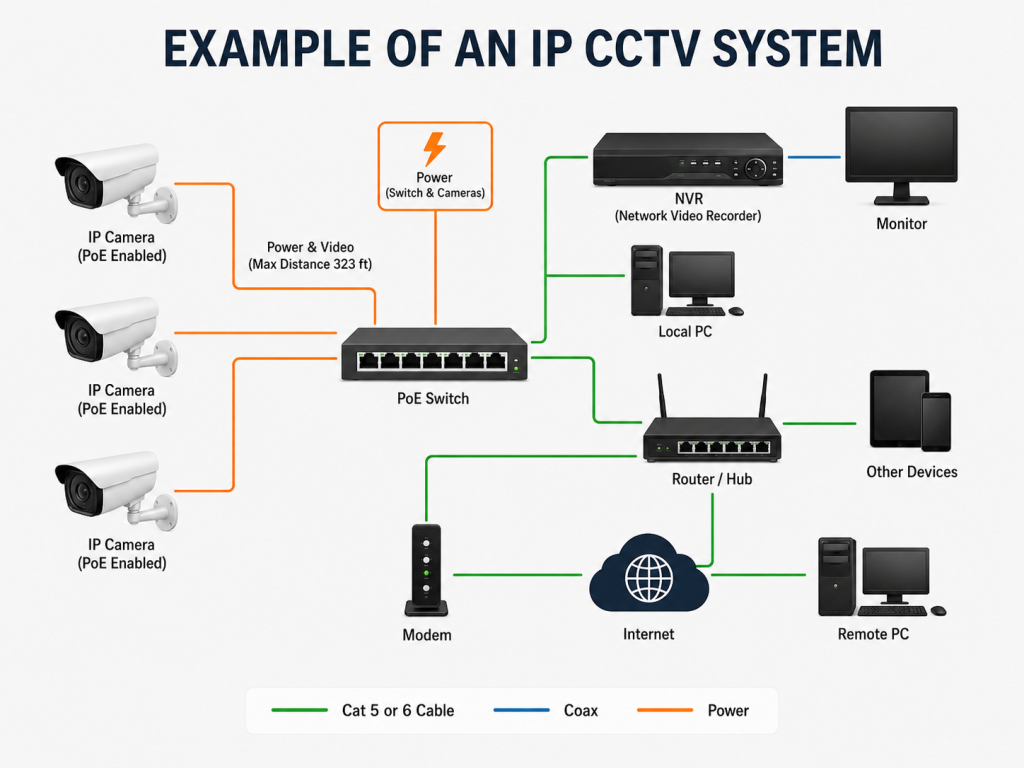
An IP CCTV system, also known as a network CCTV system, uses digital cameras that connect through a network. IP stands for Internet Protocol.
Instead of sending analogue video signals, IP cameras send digital video data through network cables, usually Ethernet cables, or sometimes through Wi-Fi. The footage is usually recorded using an NVR, which stands for Network Video Recorder.
IP CCTV systems are modern, flexible, and often provide higher image quality than traditional analogue systems.
Main Difference Between IP CCTV and Analogue CCTV
The main difference between IP CCTV and analogue CCTV is how the video footage is captured, transmitted, and recorded.
An analogue CCTV camera sends video through coaxial cable to a DVR. An IP CCTV camera sends digital video through a network to an NVR or cloud-based storage system.
In simple terms:
Analogue CCTV is an older wired system that uses DVR recording.
IP CCTV is a newer digital system that uses network-based recording.
IP CCTV vs Analogue CCTV: Quick Comparison
| Feature | IP CCTV | Analogue CCTV |
|---|---|---|
| Video quality | Usually higher | Usually lower |
| Cable type | Ethernet/network cable | Coaxial cable |
| Recorder | NVR | DVR |
| Remote viewing | Easier and more flexible | Possible, but less advanced |
| Installation | More flexible | Often simpler for older systems |
| Scalability | Easier to expand | Can be more limited |
| Cost | Usually higher upfront | Usually cheaper upfront |
| Best for | Modern homes and businesses | Basic CCTV or older properties |
1. Image Quality
One of the biggest differences between IP CCTV and analogue CCTV is image quality.
IP CCTV cameras usually offer better resolution, clearer images, and more detailed footage. This can be very useful when identifying faces, number plates, vehicles, or activity around your property.
Analogue CCTV cameras can still provide useful footage, but the image quality is often lower compared to IP cameras. Modern analogue systems have improved, but IP CCTV is generally the better choice if you want sharp and detailed video.
Best option for image quality: IP CCTV
2. Installation and Cabling
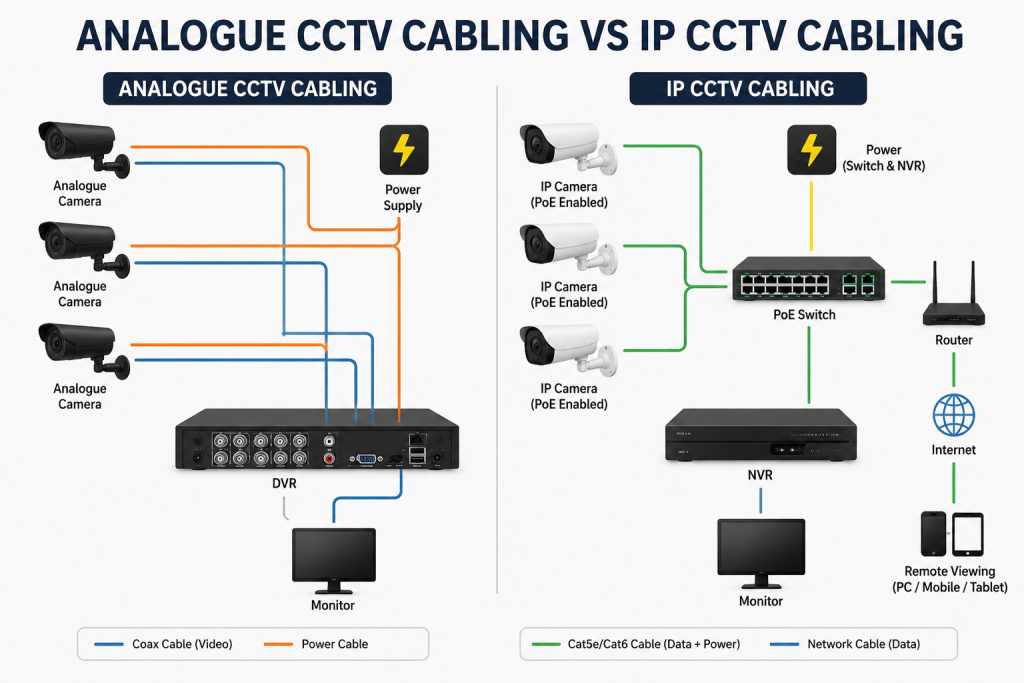
Analogue CCTV systems normally use coaxial cables. These cables connect each camera directly to the DVR. If your property already has coaxial CCTV cabling installed, an analogue upgrade may be more straightforward.
IP CCTV systems usually use Ethernet cables. In many cases, a single cable can provide both power and data using PoE, which stands for Power over Ethernet. This can make installation cleaner and more flexible.
For new CCTV installations, IP CCTV is often the preferred option because it is easier to expand and manage.
3. Remote Viewing
Both IP CCTV and analogue CCTV systems can offer remote viewing, but IP CCTV usually provides a better experience.
With IP CCTV, you can often view your cameras from a smartphone, tablet, or computer with better flexibility. Many IP systems also support alerts, motion detection, and advanced app features.
Analogue CCTV systems can also support remote viewing if the DVR is connected to the internet. However, the features may be more limited depending on the system.
Best option for remote viewing: IP CCTV
4. Storage and Recording
Analogue CCTV systems record footage on a DVR. The DVR receives video from each camera and stores it on a hard drive.
IP CCTV systems usually record footage on an NVR. Because the footage is already digital, the system can often handle higher resolution video and more advanced recording features.
Some IP CCTV systems can also support cloud storage, depending on the setup.
5. Cost
Analogue CCTV systems are often cheaper upfront. The cameras and equipment can cost less, especially for basic installations.
IP CCTV systems usually cost more at the beginning, but they offer better image quality, more features, and easier expansion. For many homes and businesses, the extra investment can be worth it.
Cheaper upfront option: Analogue CCTV
Better long-term option: IP CCTV
6. Scalability
If you plan to add more cameras in the future, IP CCTV is usually the better choice.
IP systems are easier to expand because they work through a network. This makes them ideal for growing businesses, larger properties, warehouses, offices, and commercial sites.
Analogue CCTV systems can be more limited because they depend on the number of available channels on the DVR. For example, if you have an 8-channel DVR, you can usually only connect up to 8 cameras.
Best option for expansion: IP CCTV
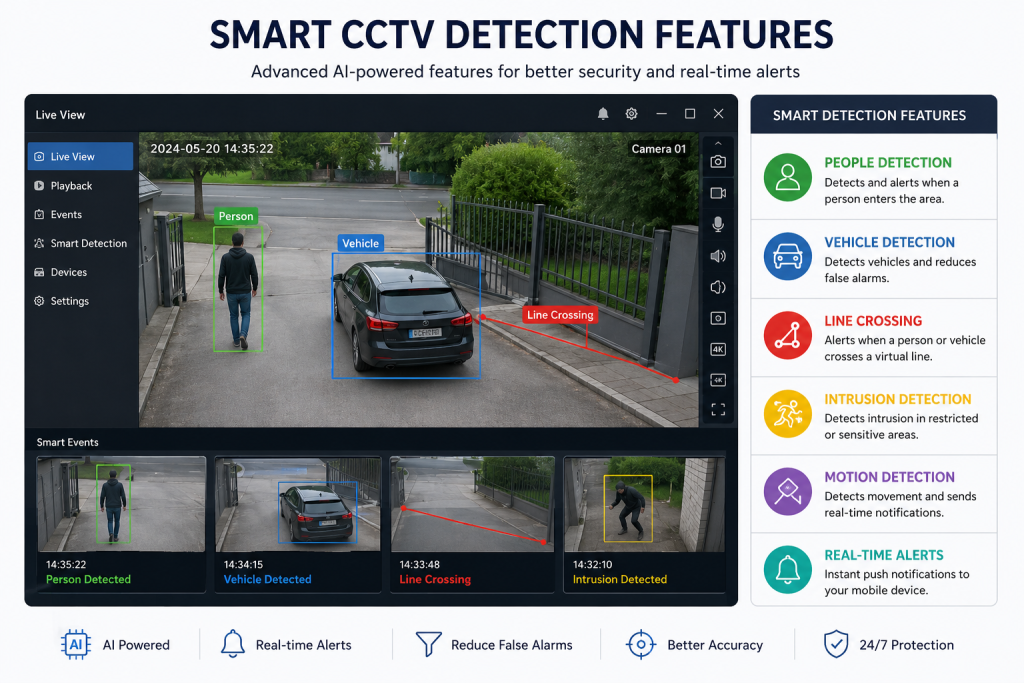
7. Security Features
Modern IP CCTV systems often include advanced features such as:
- Motion detection
- Smart alerts
- Line crossing detection
- People detection
- Vehicle detection
- Higher resolution night vision
- Better remote access
- Integration with other security systems
Analogue CCTV systems usually offer more basic recording and monitoring features. They can still be useful, but they may not provide the same level of smart security.
8. Reliability
Both IP and analogue CCTV systems can be reliable if they are installed correctly.
Analogue systems are often seen as simple and stable because each camera has a direct cable connection to the DVR. However, cable quality and distance can affect performance.
IP CCTV systems are also reliable, but they depend on the quality of the network setup. A professionally installed IP CCTV system should be stable, secure, and suitable for long-term use.
Which CCTV System Is Better?
For most modern homes and businesses, IP CCTV is usually the better option. It provides better image quality, easier remote viewing, smarter features, and more flexibility.
However, analogue CCTV can still be a good choice if you want a basic security system, have a smaller budget, or already have existing coaxial cables installed.
The best option depends on your property, budget, and security needs.
When Should You Choose IP CCTV?
You should consider IP CCTV if you want:
- High-quality video footage
- Clearer images for identification
- Remote viewing on mobile devices
- Smart security features
- A system that is easy to expand
- A modern CCTV setup for your home or business
IP CCTV is ideal for homes, offices, retail shops, warehouses, schools, restaurants, and commercial properties.
When Should You Choose Analogue CCTV?
You may choose analogue CCTV if:
- You want a lower-cost CCTV system
- You already have coaxial CCTV cables installed
- You only need basic video recording
- You have a small property
- You want a simple security camera setup
Analogue CCTV can still provide effective security, especially for basic monitoring.
Can You Upgrade from Analogue CCTV to IP CCTV?
Yes, you can upgrade from analogue CCTV to IP CCTV.
Many property owners choose to upgrade because they want better image quality, improved remote viewing, and more advanced features. In some cases, existing cabling may be reused with special equipment, but this depends on your current system.
A professional CCTV installer can inspect your property and recommend the most suitable upgrade option.
IP CCTV vs Analogue CCTV: Which One Should You Choose?
If you want a future-ready system with better quality and smarter features, IP CCTV is the stronger choice.
If you want a simple and budget-friendly system, analogue CCTV may still be suitable.
For most new CCTV installations, IP CCTV is recommended because it offers better performance, better flexibility, and better long-term value.
Need Help Choosing the Right CCTV System?
At Lensia, we help homeowners and businesses choose reliable CCTV solutions for their property. Whether you need a new IP CCTV system, an analogue CCTV upgrade, or professional CCTV installation, our team can help you find the right option.
A properly installed CCTV system can improve security, protect your property, and give you peace of mind.
Contact Lensia today to discuss the best CCTV system for your home or business.
Frequently Asked Questions
Is IP CCTV better than analogue CCTV?
Yes, IP CCTV is usually better than analogue CCTV because it offers higher image quality, smarter features, and easier remote viewing. However, analogue CCTV can still be suitable for basic security needs.
Is analogue CCTV still worth using?
Analogue CCTV can still be worth using if you need a simple and cost-effective security system. It may also be suitable if your property already has coaxial CCTV cables installed.
Does IP CCTV need internet?
IP CCTV does not always need internet to record footage locally. However, internet access is usually needed for remote viewing, mobile app access, and cloud features.
What is the main advantage of IP CCTV?
The main advantage of IP CCTV is better image quality and more advanced features. IP cameras can provide clearer footage and are easier to expand.
Can I view analogue CCTV on my phone?
Yes, many analogue CCTV systems can be viewed on a phone if the DVR is connected to the internet and supports remote access.
Which CCTV system is best for businesses?
IP CCTV is usually best for businesses because it offers better quality, flexible expansion, remote access, and advanced security features.
Which CCTV system is cheaper?
Analogue CCTV is usually cheaper upfront. IP CCTV may cost more initially, but it often provides better long-term value.
Can Lensia install IP CCTV and analogue CCTV?
Yes. Lensia can help with CCTV installation, upgrades, and advice on choosing the right security camera system for your property.